
Many people come to our Costa to relax, swim and enjoy the weather. You should be allowed to do that. You also need that from time to time. Then you want food, and here you have top quality, both in shops and in restaurants, and at prices that Norwegians can live with.
Many travelers need more experiences. This applies especially if you are an advanced tourist, but also those who have invested everything in a holiday home here. In particular, those who are considering buying a holiday home should think about this.
To take a bath first. The water and beaches here are first class, and finnmarkings may find it perfect for swimming all year round. Further south, one might think that 14 degrees in the water in February is a bit scarce, although in 2024 the minimum temperature in the water was actually 16 degrees, precisely in February. It sounds like a bad Nordic summer! Those who are more careful about it can enjoy acceptable bathing water from the end of May until often the first weekend in November.
The beach may not be where you are every day – but there are also countless swimming pool meadows available throughout the season. Some are heated in the “winter”. If this is not enough, there are municipal swimming pools that you can enjoy. In the very south of Alicante, in Pilar de la Horadada, there have actually been Olympic competitions, so the pool there is excellent! There is also a huge sports facility there for ‘everything else’ too.
Water activities are perhaps the most obvious activity you can choose. Here you can do almost everything there is, not from a to z, but at least from a to z! Find your local tourist information and they will put you on the right track. We will come up with a catalog of possibilities later.
Feed
When it comes to food, there’s a lot to choose from. ‘Holiday food used to be very simple, a lot of the same things. Now the catalogue has been expanded to include most things. We encourage you to use the web or Google Maps to search for what you like best. But, but – yes – you can get both McDonald’s and Burger King too.
There are plenty of opportunities for shopping. Orihuela Costa has a mega shopping centre that attracts countless tourists as well as locals. Here you can find both Hennes&Mauritz and the local Zara. This centre – La Zenia – is built like a Spanish village, a kind of Cardamom City – where you wander the streets between the shops, with countless restaurants on the second floor. We also have the Dos Mares – Two Seas centre, on the border between San Pedro del Pinatar and San Javier in Murcia. This is also a nice place, and here it is built-in. Outside the centres, you’ll find many shops from different countries, in addition to the Spanish ones. For homeowners (including future ones), we particularly mention that Danish Jysk has a solid presence.
But also try shopping in Murcia and Cartagena! These tours can be combined with many other things.
Our Costa isn’t just sunshine and beaches – it also has a long and exciting history. It was from Cartagena that Hanibal travelled with his huge army – including lots of elephants. He tramped up the Costa and eventually made his way across the Alps. Eventually, he fought in Italy against the Romans. The very name Cartagena alludes to Carthage, which ruled large areas until the Romans crushed them. About 3,340 years ago, the Romans took Carthage, in a battle that is recreated every year in a fiesta. We recommend that readers visit this party.
Subsequently, the Romans expanded Cartago into a centre of support. In Cartago you can see their remains – including a very solid road; the Romans could build roads. Then, of course, they had a theatre, where you can see a statue of Emperor Augustus. There are whispers that Augustus didn’t look so perfect, but that can’t be proven! If you like history and culture, a visit to this ‘mini-Colluseum’ is a great experience and highly recommended.
Take a look at the bay in which Cartagena is located. It’s a perfect harbour, which also provides perfect defensive opportunities. No wonder the Romans settled here. Throughout history, Cartagena has been the first choice. However, some ships didn’t quite make it, so underwater archaeology is an important subject for understanding history. We recommend readers visit the Museum of Underwater Archaeology, located right on the waterfront (of course!) not many metres from the Roman theatre. Then you’ll see that Cartagena has city walls, of course, with ramparts – in short, a perfect destination for a city tour.
A little later in history, Muslim rulers ruled south of the Mediterranean, and Christians north of it. With the understanding of the Koran at the time, Muslims could not be slaves, but Christians could. This led the rulers – particularly from Algiers in Algeria – to send countless expeditions northwards to take Christians prisoner. Over the course of several hundred years, it is estimated that more than a million Europeans were taken. The expeditions reached as far as Iceland, so no-one was safe. Christian rulers could buy back the spoils, but if they couldn’t afford it, they were sold locally. The king in Copenhagen did not have the means to buy the Icelanders free, so they stayed down there. When many people think that the people on the southern side of the Mediterranean often look like Europeans, it is not without reason.
Here locally, the slave expeditions also had an impact. We have place names such as Torrevieja, Torre de la Horadada, etc. Torre means tower, and this is where the locals sat and scouted for slave ships, hoping to be warned in time. The next step was to move the settlements inland so that the North Africans would not have it so easy. The fishing boats may have been in Torre de la Horadada, but the settlement was up in Pilar de la Horadada. The same was true in San Pedro del Pinatar, the neighbouring town. But for Cartagena, this was not enough. It was therefore decided to move important functions – and people – to the city of Murcia. Then the slave hunters had to cross a small mountain, and through some gorges, and it was too much for them. Murcia is also worth a visit!
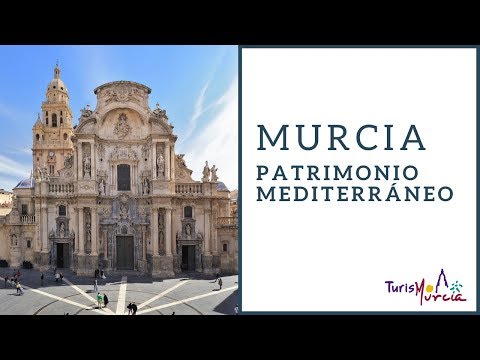
Murcia is the local university town, with a large ‘student quarter’ – which is fun to visit all year round. Homeowners – both existing and future – can enjoy the local Ikea. There’s also Santa Lucia, performed by Scandinavian schoolchildren, if you fancy it and are here at the right time. The Spaniards think it’s brilliant with the children in white robes! Otherwise, Murcia has a lot to offer as the capital of its own region.
North of Murcia city – and still in the Murcia region – there are two Roman baths with underground hot springs. The Romans knew how to enjoy themselves in the baths, which is where many decisions were made. You can wander underground in beautiful facilities that were created thousands of years ago. Naturally, a Roman bath is part of the experience, as is a massage. When you emerge from the facility, perhaps to an overnight hotel, you feel like you’ve travelled back in time.
A little further south, also inland, is Carevaja de la Cruz, a Catholic pilgrimage centre. There are pilgrimage routes from the coast to Carevaja de la Cruz, along the same lines as to Santiago de Compostela on the north coast. This town is an experience for believers and non-believers alike.
Then – at the top of Murcia, you’ll come to Jumilla, where you can enjoy very local wine, as well as acquiring local olive oil. There are stall visits on offer, which are worth trying if you’ve already booked a hotel. Hotels are not expensive in the city, they are located outside the tourist flow. If you’re lucky, you’ll be able to see all the way down to the Mediterranean, down to your holiday home on the coast.
Further up, you’ll reach Yecla, which is the place for hiking! Here there can be snow quite early, sometimes even in November, on the peaks. They have great walkways and trails upwards, so if you need a change from beach life, this is one to try. In the warmer months, this can be a chilling experience.
Even further south in Murcia, there are nature experiences to choose from. For example, Pilar de la Horadada has a nature park in a mountainous area. You’ll get directions at the tourist office, and park rangers will help you when you’re there; great service!
Our Costa has virtually every activity available, from ballet and other cultural events to mountain adventures. Ask the tourist office.
What do we want with this article? We don’t want anyone to say that our Costa is all sun and beach, and boring in the long run. The opposite is true – you have unlimited opportunities for adventure, if you like. But if all you want to do is swim and relax, you are of course welcome to do so.