
La Manga del Mar Menor is one of Spain’s most extraordinary coastal destinations. Stretching 21 kilometers between the Mediterranean Sea and the warm, shallow Mar Menor lagoon, this narrow sandbar offers a landscape unlike anywhere else in Europe. With beaches on both sides, calm waters, vibrant tourism, and a fascinating geological history, La Manga attracts visitors from around the world. But behind its beauty lies a delicate natural system—one that requires careful protection to ensure it remains intact for future generations.
This guide explores how La Manga was formed, why it is fragile, what makes it such a popular tourist destination, and which coastal‑protection measures are already in place—as well as what experts recommend for long‑term preservation.
What Makes La Manga So Special? A Dual‑Coastline Paradise
La Manga is famous for its two seas:
- The Mediterranean, offering open‑sea beaches, waves, and refreshing breezes
- The Mar Menor, Europe’s largest saltwater lagoon, known for its warm, shallow, and exceptionally calm waters
This dual‑coastline gives visitors a choice between two completely different beach experiences just a few meters apart. Families love the Mar Menor for its safety and warmth, while water‑sports enthusiasts enjoy sailing, windsurfing, and kayaking. The Mediterranean side offers long sandy beaches, beach bars, and excellent swimming.
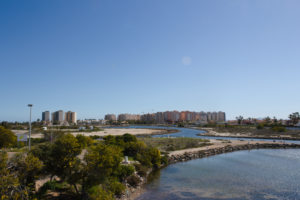
Tourism in La Manga thrives thanks to:
- Year‑round sunshine
- Warm water temperatures
- Resorts, restaurants, and marinas
- Easy access from Murcia and Alicante airports
- Unique natural scenery
You can come either by road from the south, or by boat across Mar Menor from San Javier. There is no road to the north, since that is a natural park, and there is a shallow strait between La Manga in the south and San Pedro del Pinatar just north of it.
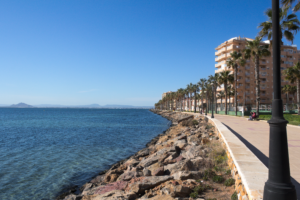
The road has four lanes most of the time, and you will also see that it is dividing itself in two, so when you go up, you are on the Mediterranean side, and when you go down, you see the Mar Menor. You of course have a view to many service offerings.
They have also kept the division in two municipalities, so the northern part belongs in San Javier, across the Mar Menor. So to go there from San Javier itself to the northern part of San Javier, you will drive through other municipaliies. Like a colony, if you see it that way!
Why Protecting La Manga Matters for Tourism
Tourism is the lifeblood of La Manga. Visitors come for:
- Beautiful beaches
- Warm, shallow waters
- Water sports
- Family‑friendly swimming
- Mediterranean cuisine
- Relaxed seaside living
La Manga has high standard; prices for properties are high, and restaurants etc also have high standards (and often prices!)
As for its nature: If erosion continues unchecked, beaches narrow, infrastructure becomes vulnerable, and the tourism experience declines. Protecting La Manga is not only an environmental responsibility—it is essential for the local economy.
Healthy beaches mean:
- More visitors
- Even higher property values
- Stronger local businesses
- A better experience for residents and tourists
How La Manga Was Formed: A Natural Wonder Thousands of Years in the Making
La Manga did not appear suddenly. Its formation began around 10,000 years ago, when sea levels stabilized after the last Ice Age. Sediments carried by currents and rivers gradually accumulated against a chain of volcanic outcrops. Over thousands of years, these sand deposits connected the outcrops, forming the long, narrow barrier that now separates the Mediterranean from the Mar Menor.
By around 2,000 years ago, La Manga was essentially complete. Historical maps from the 16th century already show a recognizable La Manga long before modern development.
Why La Manga Is Fragile: A Dynamic Sandbar Under Pressure
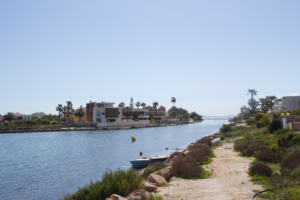
La Manga is a barrier spit, meaning it is naturally flexible. Sand moves constantly:
- Wind builds dunes
- Waves shift sand along the shoreline
- Storms open temporary channels
- Currents close them again
This natural movement is what keeps La Manga stable. But over the past 60 years, heavy urbanization has reduced this flexibility.
Main pressures on La Manga today
- Loss of natural dunes
- Construction of promenades and seawalls
- Tall buildings altering wind patterns
- Artificial channels changing water flow
- Increased storm intensity and sea‑level rise
Coastal‑Protection Measures Already Used in La Manga
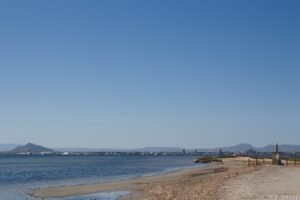
Despite the challenges, several important protection strategies are already in place.
Beach Nourishment (Common and Ongoing)
La Manga regularly receives artificial sand replenishment, especially after strong storms. This is currently the most widely used method.
- Pros: Immediate improvement of beach width
- Cons: Temporary; sand often washes away within months
Soft Engineering Structures (Used in Key Areas)
Some sections of La Manga use:
- Submerged breakwaters
- Artificial reefs
- Wave‑energy‑reducing structures
These help reduce erosion without the visual impact of large seawalls.
Visitors just enoy the marvel, but behind this, there is a lot of efforts from the Government.
Limited Dune Restoration (Present but Small‑Scale)
A few areas—mainly in the south and near protected zones—have dune‑restoration projects, including:
- Sand‑trapping fences
- Native dune vegetation
- Fenced dune‑protection areas
These efforts help stabilize the coastline but cover only a small portion of La Manga.
This type of restauration/preservation you will also see in other areas of the coast.
Scientific Monitoring (Continuous)
Authorities monitor:
- Sediment movement
- Beach profiles
- Storm impacts
- Water flow through the channels
This data guides future interventions and helps predict erosion patterns.
Recommended Solutions Not Yet Fully Implemented
Experts agree that La Manga needs a long‑term, integrated coastal‑management plan. Several recommended solutions are not yet applied at scale.
Large‑Scale Dune Restoration
Rebuilding continuous dune systems along the entire sandbar would dramatically improve resilience. This would require:
- Creating wide dune corridors
- Planting native vegetation
- Removing or relocating structures in critical areas
This is of course a bigger challenge to implement, especially if larger buildings must be removed!
Limiting New Construction
Although new regulations restrict building in vulnerable zones, La Manga’s existing density still limits natural sand movement. The buildings themselves is not a big issue, though – specialists assure that there is no risk that La Manga “would slide into the sea”.
Expanded Soft Engineering
Submerged breakwaters and artificial reefs could be extended to more erosion‑prone areas.
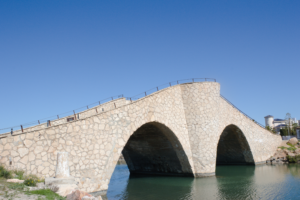
This must be local, and it somehow must work together with the local fishery, and the ship traffic. There are fisheries both in La Manga and on the Medeterranian side, helped by artificial channeling between the two seas, including bridges.
Long‑Term Sediment Management Plan
A coordinated strategy for sand sourcing, nourishment frequency, and ecological impact is still missing.
Path Forward: Balancing Tourism and Nature
La Manga can be preserved—but only through a combination of science‑based management and respect for natural processes. The most effective long‑term strategies include:
- Restoring and protecting dune systems
- Expanding soft engineering solutions
- Reducing rigid coastal structures
- Continuing beach nourishment where necessary
- Monitoring sediment movement and storm impacts
- Coordinating regional and national coastal policies
With thoughtful planning and cooperation between residents, visitors, scientists, and authorities, La Manga can remain a vibrant, stable, and beautiful destination for generations.
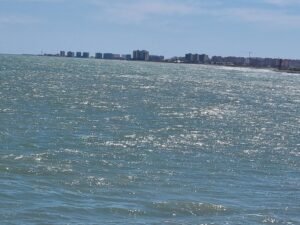
In the meantime, enjoy La Manga while you are here on the coast, and if you have not yet visited, you should do it now! It is unique, like skyscrapers in the sea!
Where to stay: You reach La Manga most easily from Casa Costanest, and a bit further from the Luxury villa in Pilar de la Horadada, and even a bit more from Orihuela Costa. But none of them are far away. You can drive there or take the small boat over Mar Menor from San Javier.